
While we’re staying in Dubbo, we decided to use today for a day trip to a couple of places south of here that are only about an hour away: the Parkes and Wellington.
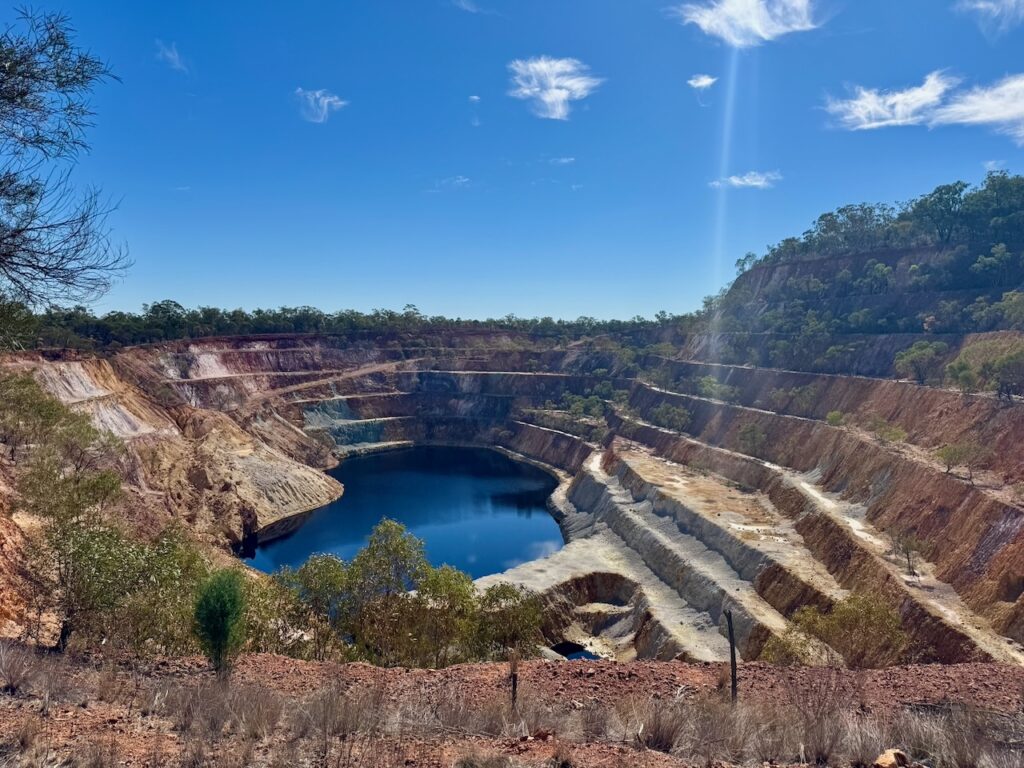
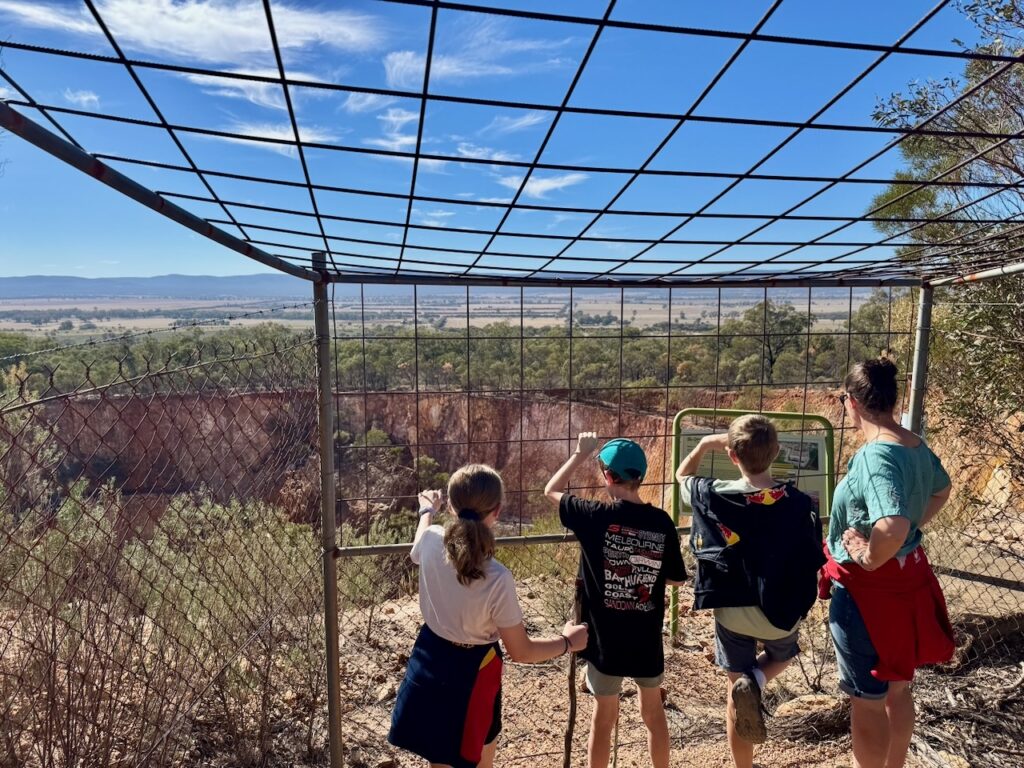
After yesterday’s early start and big day, it was nice to have a slower morning. We headed off for Parkes at about 9am this morning. As we drove through the town of Peak Hill on the way, we noticed signs for the Peak Hill Gold Mine tourist area. Given we were a bit flexible and relaxed with timings this morning, we decided to jump off the highway and have a look. And we’re so glad we did – we finally got to see an open cut mine! (We’ve been hoping to see one a few different times along the way so far, and haven’t been able to.) There was a short 1.3km walk that takes you up and around to some great viewing points into the main mine, and a couple of the smaller mines as well. Peak Hill was originally used for mining in the late 1800s – but this was the older shaft-based techniques. In 1996 they commenced mining again, but using the more modern and safer open cut techniques. It was interesting to also read the desire to use that opportunity to rehabilitate the Peak Hill area that had become overrun with rubbish and feral animals, was unsafe, and full of introduced weeds (which feels foreign when you consider how aggressive open cut mining is to the landscape – but it was interesting an read in the context of what had become of the old mine site).
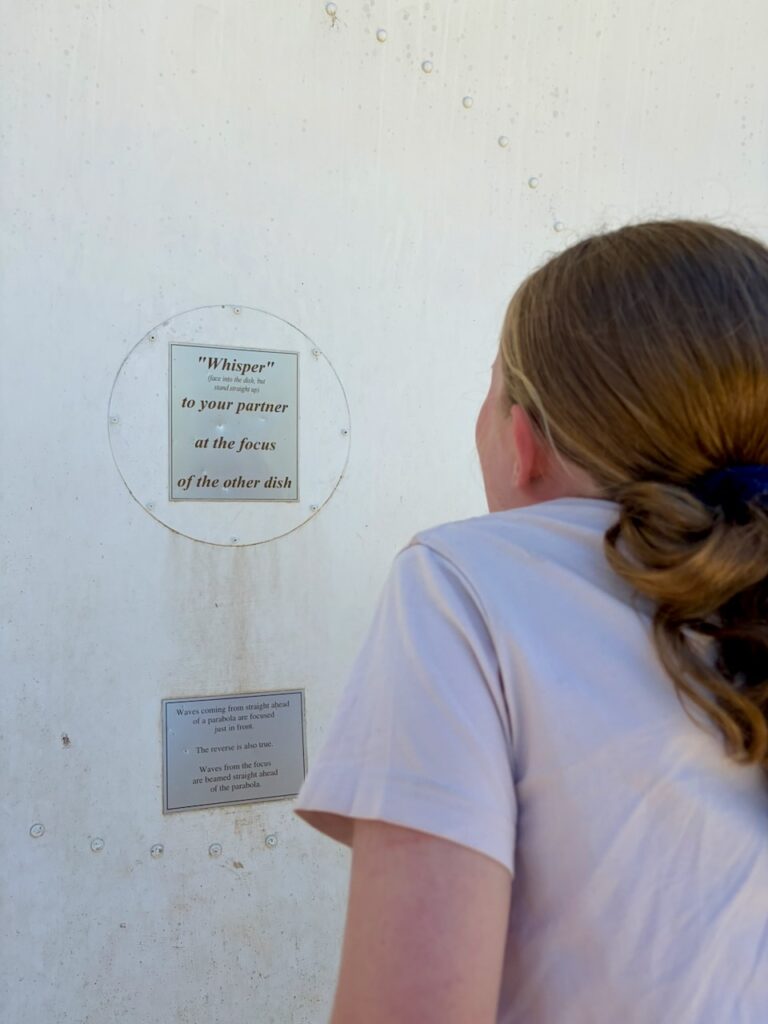
We continued on toward Parkes and pulled in to the CSIRO Parkes Observatory that sits a few kms north of the town. I had been looking forward to coming to see The Dish for quite a while! It felt a bit like a few other large attractions – as you’re driving towards it, you spot it on the horizon from quite a few kms out. As much as I would’ve loved to visit and see the workings inside the actual radio telescope (named Murriyang, which is the Wiradjuri word for ‘skyworld’), because it’s working 24/7 there are only very select times during the year when they have an open day and you can book a behind-the-scenes tour. Instead, you get to spend your time in their Visitors Centre, which was still most definitely worth a visit. Before you even get inside, there are a head into the visitors centre, there are a couple of ‘whispering dishes’ at either end of the garden. They’re pointed directly at each other, and shaped perfectly to mean that you can whisper in one and the person at the other end (some 50m away) can hear you! It provided a great example of the concept of how the parabolic shape captures the sound waves – just like its big counterpart does for radio waves.
Inside the visitors centre was a great series of information on how Murriyang was first conceived as a radio telescope in the early 1960s, and how its use has grown and expanded throughout the decades since. Up until 2012, any astronomers and scientists needed to be physically on site to conduct any research using the telescope – but since 2012, Murriyang can now be booked and operated remotely by scientists. (But staff obviously still remain on site to manage far more complex elements of how it operates.) There’s of course plenty of information about how Murriyang was used to support the Apollo 11 mission. As you’d expect, there’s also a section on the movie The Dish, including the operating console from the movie which was donated to the centre after the movie was completed – the console was tediously created using period-specific photos to ensure it was matched as accurately as possible. Despite their desire to be accurate with the operating console, it was funny to read the information right beside it where we were gently reminded of a few tiny elements from the movie that perhaps embellished a better story over what really happened. We are, of course, about to sit down and watch the movie together tonight.
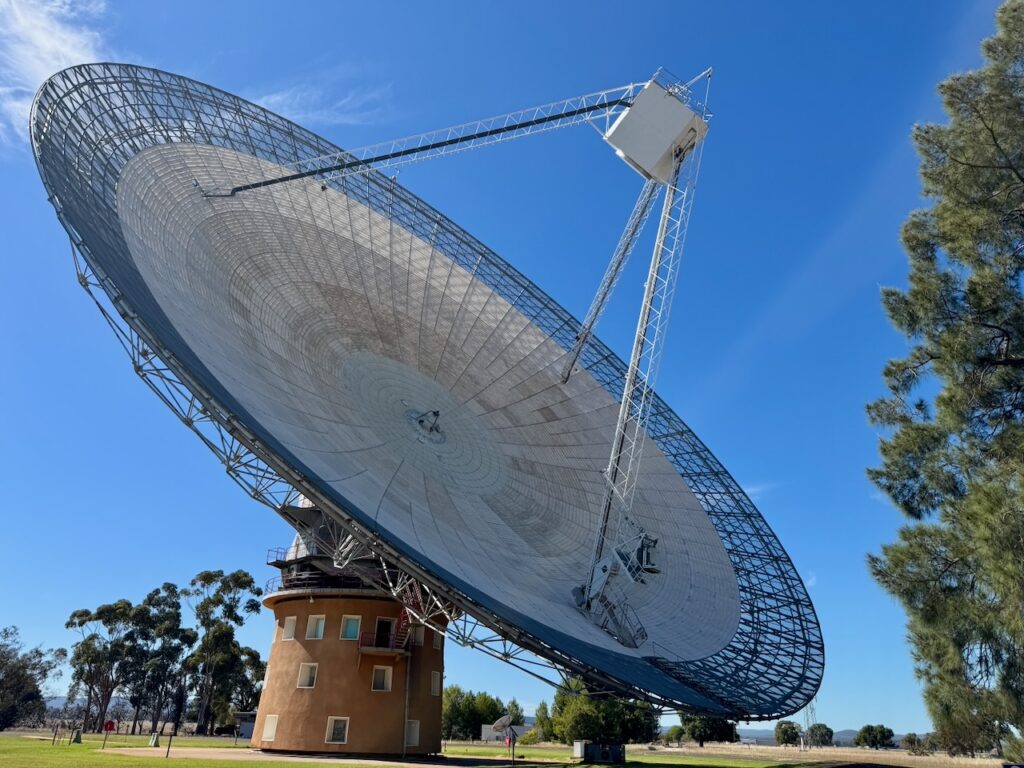
As you head out the back of the visitors centre, you get the beautiful view of Murriyang – right in the middle of a sheep paddock. As I walked out, it was perfectly positioned for a photo – almost as low as it can go (60º), and pointing just to the side of the visitors centre. As I was standing there admiring it, and enjoying taking a bunch of photos, it started to move! We got to then watch over the next few minutes as it seemed to return to the “stowed” position (completely vertical).
In the middle of all this, we did head into their theatrette where three short documentaries are shown – a couple about the universe and the size of different planets and stars, and one about the Murriyang telescope itself.
That’s probably the most I’ve written about any one single element of our trip!
From Parkes, we started to make our way toward Wellington, and decided to stop off at the tiny town of Yeoval on the way through and have our picnic lunch there. Yeoval is the town that two of our friends grew up in, and so we had to get a couple of photos there! Yeoval is also the place where Banjo Patterson spent his childhood, and so there’s a series of great sculptures in the park which we also spent some time exploring.
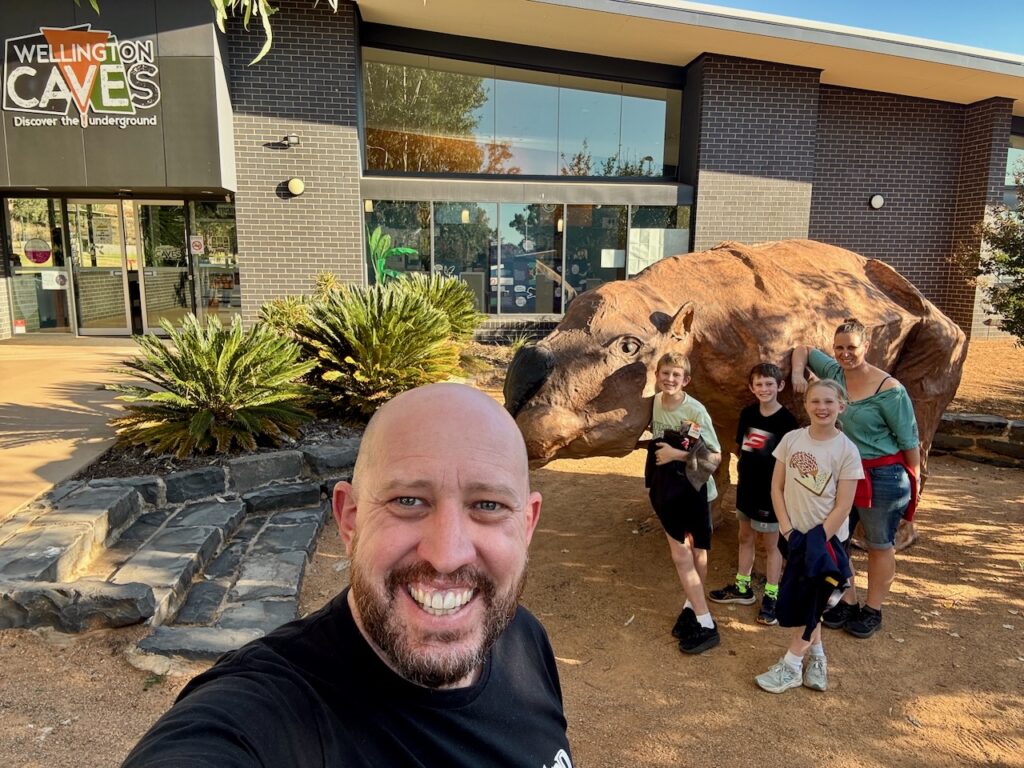
We continued along after lunch and arrived at Wellington Caves for our tour at 2:30pm, and after a brief safety briefing we got our hard hats and headed down into their Cathedral Cave. There are about 40 caves in the complex, but only a couple can be accessed by the public. This cathedral cave had been access for many years before it was properly managed, and so unfortunately there’s a bit of damage that isn’t ever really going to be restored. And while setting up lighting in the cave, and proper walkways could also be considered doing further damage to something natural, it’s always tricky to ride that line between preserving something natural and allowing structured access to something so beautiful.
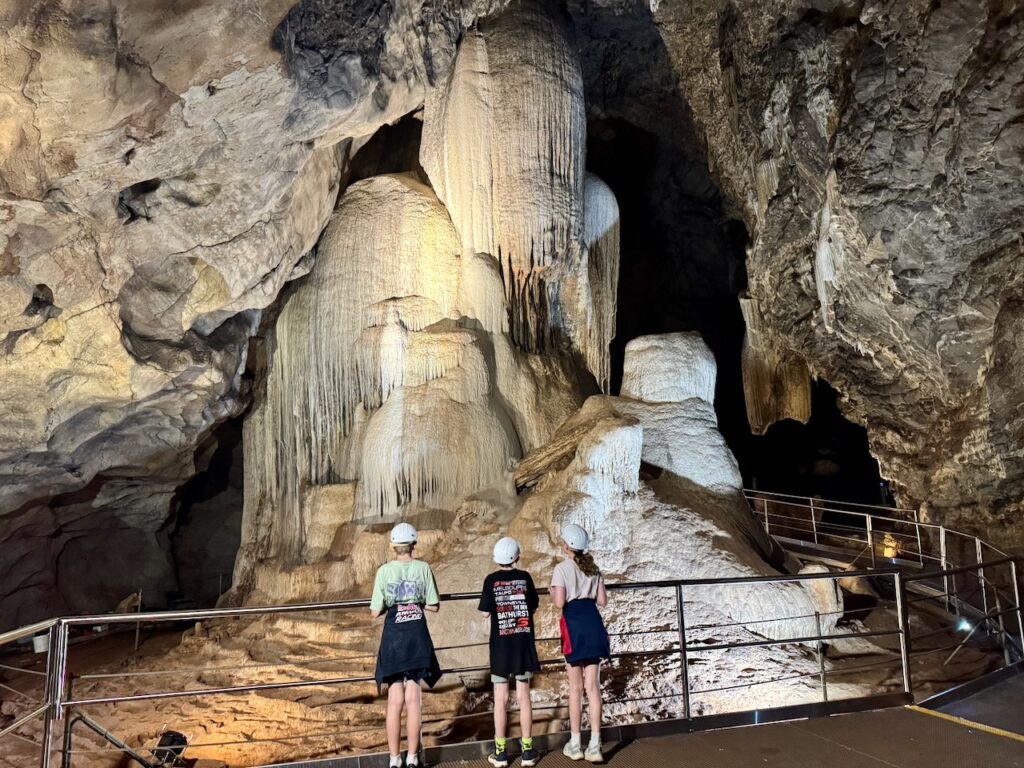
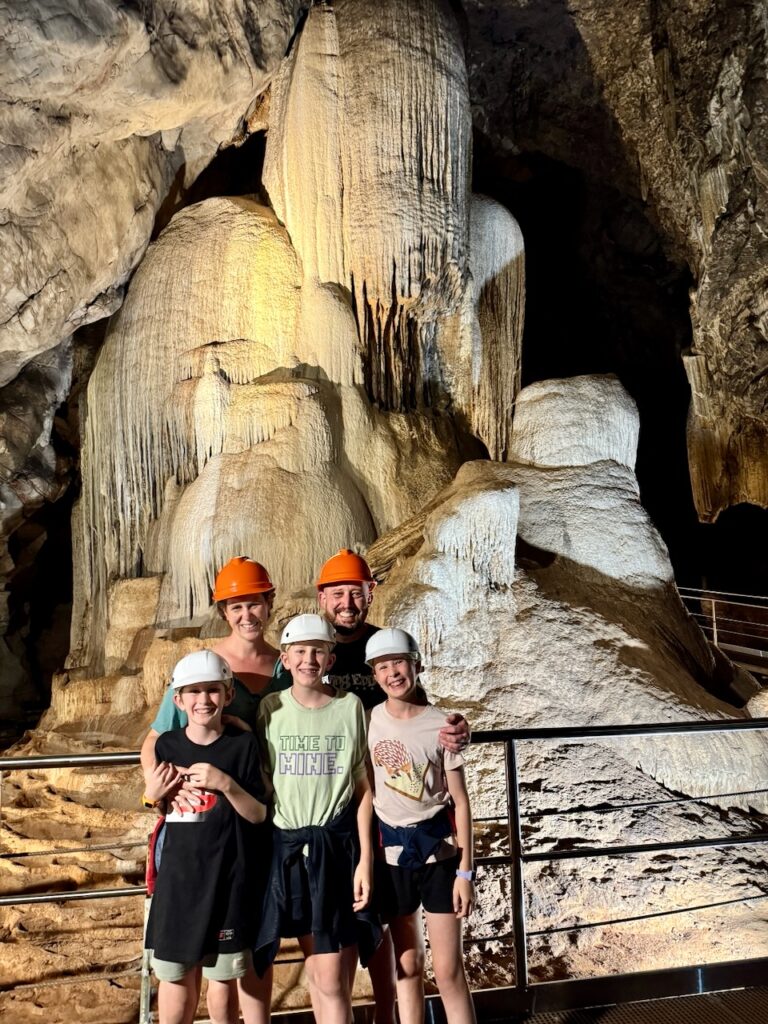
One thing that was a surprise was the fossils that were discovered in these caves – it’s known as Australia’s birthplace of palaeontology! They’ve discovered fossils from some amazing creatures from millions of years ago, known as megafauna. And they continue to search for different fossils today – things like plants, and smaller creatures, that add to the context of how those megafauna lived.
We head into the final couple of days of the holiday tomorrow!
